
Like bacon and maple syrup, culinary magic lies in unexpected combinations.
Uncommon skill combinations can be magical too.
Think technology and ethnography (good on you Genevieve Bell – @feraldata), economics and psychology (behavioural economics) and design, with well just about anything.
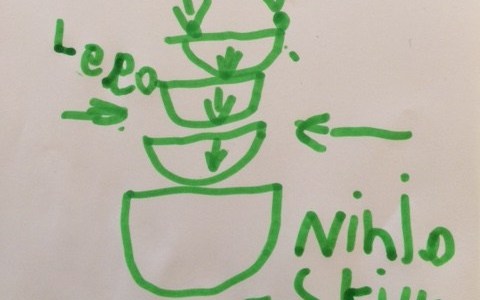
Layer on something like leadership or storytelling, and you’re getting to what writer and satirist Scott Adams calls a ‘talent stack’. A combination of multiple skills and knowledge areas that can have commercial value and be an alternative to being the best in a single field.
Talent stacks don’t superseded notions of generalists and specialists, or polymaths, but with advances in machine learning, in narrower functions in particular, people with great talent stacks seem likely to be important lynch pins in organisations and communities.
Try this at home kids!
Today’s suggestion is a twist on the classic “What would you like to be when you grow up?”
If our kids can expect to ‘be’ a range of things in a lifetime and talent stacks can be an effective means of giving individuals more power and autonomy, this seems to be an FAQ ripe for re-framing.
Next time the discussion turns to ‘What would you like to be when you grow up?”, how about asking instead ‘What do you want to do when you grow up?’, ‘What interest/skills can you bring to a job or problem that needs solving?’ or ‘What will your talent stack be?’
Thank you Emily Painter (@CoatOfPainter) for drawing our attention to talent stacks. Thank you Tim Ferriss (@tferriss) for reminding us of the importance of asking better questions.
Postscript – (indirect) stamp of approval from the excellent Adam Grant!
 try this at home kids