
We prototype to test and learn – “everything is a guess until you do something and then, once you do something, you can learn”, Amy Whitaker on the Goop podcast.
In science this has a rigour to it. An hypothesis is made: the fact prototype. The scientist sets out to disprove it, methodically.
In design thinking and typically human centred design, the prototype is arrived at after a period of divergent thinking in concert with humans (imagine), into the second of the Double Diamonds.
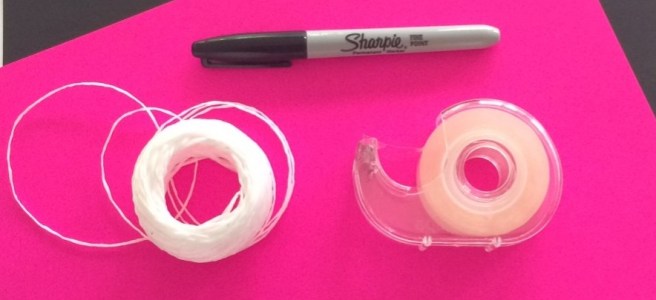
In play, small children don’t need criteria met or particular preceding steps to prototype. Small children seem to know intuitively, it’s just the best way to figure something out. With paper, card, sticky tape. Whatever’s around.
As adults, we often need the permission of a recognised methodology to prototype. Perhaps because prototyping is applied and applied practices can get a bad rap. Seen as inferior to their theoretical counterparts. Less lofty. But guess what? The kids have known it all along. Prototyping works. Testing and iterating ‘the thing’, even in a very rudimentary way, leads to better things and things not foreseen at the outset.
Tom Chi, of Google Glass fame talks about prototyping eloquently as “the realm of using paper, clay and tape in order to go and find a new insight in an ancient technology”.
Getting from A to B more efficiently won’t cut it in the future. We need kids to become adults engaged in expansive learning, primed to invent new point Bs, not yet imagined. Prototyping – with basic construction materials, pen and paper, even words – is the all important doing, the means to test and learn, to get us there.
Try this at home kids (and parents)
Value prototyping. Model it and keep it in play (puns definitely intended), through school and beyond. And try the marshmallow challenge!
https://dschool.stanford.edu/resources/spaghetti-marshmallow-challenge
Thank you for the inspiration @theamywhit (via @goop), @dintersmith and @thegoodtomchi.
 try this at home kids