
Once upon a time, waiting for an Uber

In the first season of StartUp, Alex Blumberg talks about an early pitch to Chris Sacca, for what would later become Gimlet Media. On a sidewalk, under pressure, it doesn’t go well. Chris Sacca steps in and translates. He plays the conversation back with the contemporary constraint “in the two minutes it’ll take for an Uber to arrive”.  Compelling and to the point, its pitch perfect.

The ‘pitch’ is a modern form of storytelling. And the pitch itself can be enough; to win investors, partners, even customers. In business, as in life, stories matter. A lot.

The value of authenticity and narrative arc are widely acknowledged in shaping how compelling a story is. In ‘A Debate with Malcolm Gladwell from WorkLife with Adam Grant’, however, Malcolm Gladwell and Adam Grant focus-in on another quality of storytelling “interestingness”.

For Malcolm, “…that quality of being specific and being able to illustrate your larger points with… precision is the quality of what makes something interesting.”

For Adam, interestingness has its origins in a certain kind of… pause. Drawing on the work of sociologist Murray Davis he suggests that “If someone just affirms your assumptions, you don’t get curious, you don’t get intrigued, there’s no surprise… when you’re interested is when it’s like ‘huh’, that’s the opposite of what I would have thought, or that’s different from what I would have believed”.

So if M. Sanjayan’s right and storytelling is a way to rule the world, well that’s a craft to master. Time to take “Once upon a time” and crank up the ‘interesting’.

Try this at home kids!

  1. Pocket full of stories: without little eyes watching, pop four or five everyday items into the pocket of a coat. This is now the storytelling coat. Get the kid(s) to put it on, check their pockets and then tell a story incorporating the objects they find.
  2. First half / second half: begin by telling a story out loud. Right after you get to a critical point, stop and let the kid(s) take over.
  3. The pitch over dinner: at breakfast time, ask the kid(s) to keep an eye out during the day for a ‘problem’ they encounter and to come to dinner with an idea to solve it.  The problem doesn’t need to be enormous – a top that’s hard to get on, pens and socks that keep disappearing – anything that doesn’t go smoothly will do.

In each case, encourage the kid(s) to make the story as interesting as possible. Talk about what might help with this. Perhaps by incorporating a real story, something they have experienced, getting very specific or getting characters to do the opposite to what you might expect.

Thank you for the inspiration Alex Blumberg (@abexlumberg), Chris Sacca (@sacca), Adam Grant (@AdamMGrant), Malcolm Gladwell (@Gladwell), Guy Raz (@HowIBuiltThis) and M. Sanjayan (@msanjayan) ℅ Tim Ferriss (@tferriss). All masters of their particular storytelling craft.

Postscript

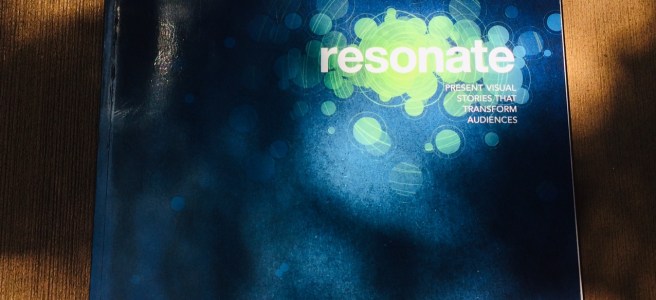
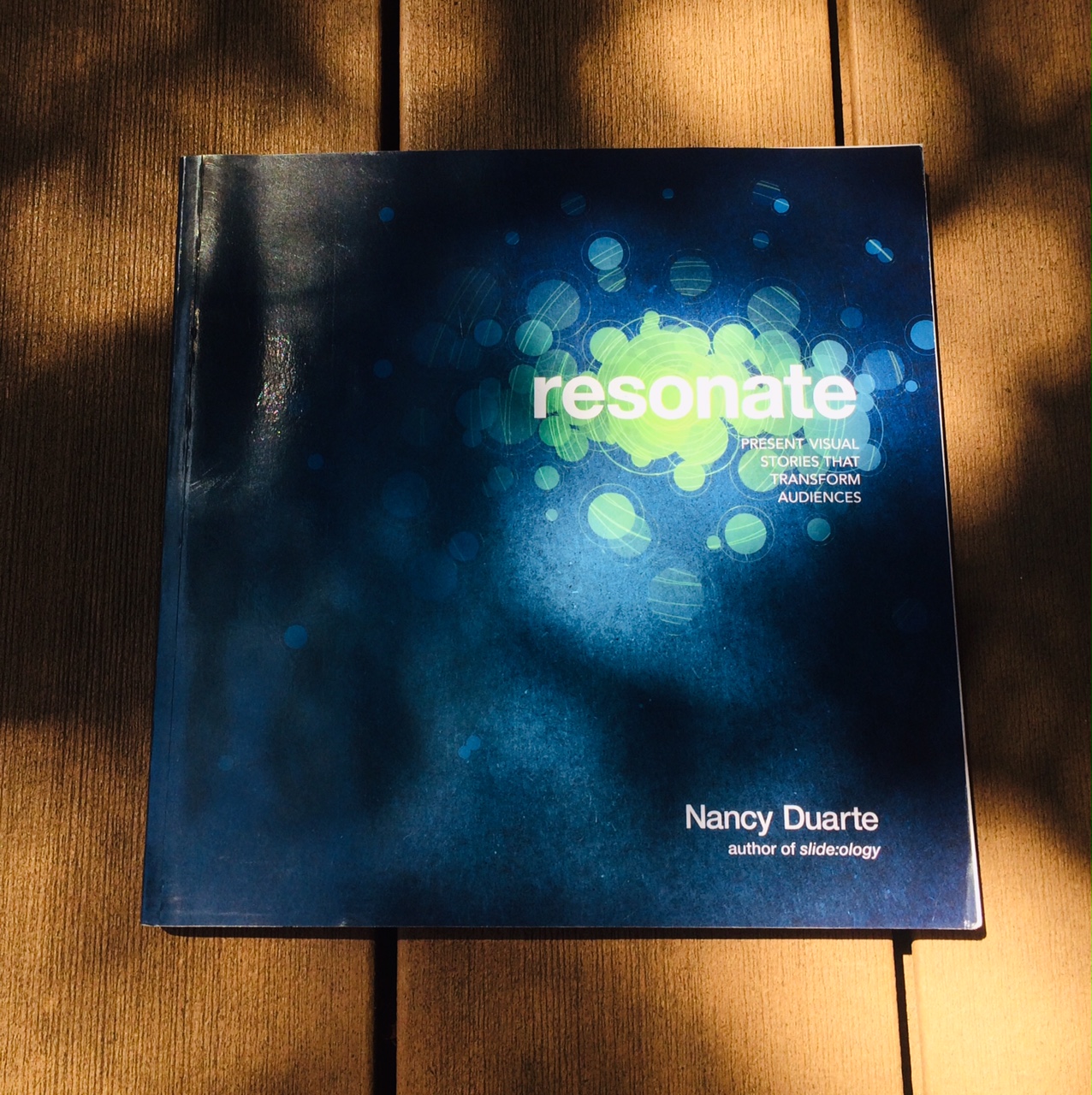
For more inspiration, Nancy Duarte‘s Resonate is a masterclass, and modern take, on “Once upon a time…”.
mattering marinade

These posts won’t all circle back to Adam Grant, but we have really enjoyed his podcast – Worklife. We also recently listened to an interview he did for Goop, in which he talks about the concept of ‘mattering’.  Sheryl Sandberg’s account of how this concept helped her and her family, got to the crux of it for us.

Sociologists describe mattering as the belief that other people notice you, care about you and rely on you. It’s the answer to a vital question that all children ask about their place in the world starting as toddlers, and continuing into and beyond adolescence: Do I make a difference to others?  Forbes, 2017

For a more academic take, here’s an article by Gregory Elliott, Suzanne Kao and Ann Marie Grant, which builds on the construct of ‘mattering’ formally introduced by Rosenberg and McCullough (1981).

We want to nurture future robot bosses who know they matter. Activity please!

Try this at home kids 

Take a cue from Adam Grant (https://goop.com/thepodcast/) and ask your kid(s) for their advice on how to handle something you’re anxious about.  This could be speaking or performing in public, or something you’re going to try for the first time.  This is a way of showing your kid(s) that you’re looking to them, relying on them, that they matter to you.

Bonus points if you find an opportunity to turn it around and play their advice back to them in the future (i.e. they find themselves in a similar situation and you remind them what their advice was to you,and how it helped you ).

A good trythisathomekids to keep in mind for dinner table conversations and car trips too, to help your kids feel they matter to you in everyday, and more more profound ways too.

Special thanks (again) to Adam Grant.

Postscript 

Here’s Adam Grant speaking some more on the subject.

super bursti

Creativity is a sought after thing. Creativity and its close companion ‘innovation’ are key drivers of many thriving businesses.  Creativity and innovation also seem likely to be even more important in the future, in part because they seem less prone to automation (AI advances pending!).

In his great podcast Worklife, Adam Grant talks about the concept of ‘burstiness’, a way creativity can happen in teams or groups.

Burstiness is when everybody is speaking and responding to each other in a short amount of time instead of having it drawn out over a long period of time.”

“Burstiness is like the best moments in improv jazz. Someone plays a note, someone else jumps in with a harmony, and pretty soon, you have a collective sound that no one planned. Most groups never get to that point, but you know burstiness when you see it. At The Daily Show, the room just literally sounds like it’s bursting with ideas (Worklife – Season 1, Episode 2)

Christoph Riedl and Anita Williams Woolley (interviewed by Adam for the podcast) have written this article on team-based problem solving, including ‘burstiness’.

Given the value of creativity and the often team-based nature of our working lives, nurturing some burstiness in our kids (and ourselves) sounds like the way to go.

But where to start? In his Worklife podcast Adam talks about the importance of ‘psychological safety’.  In short,  people need to feel comfortable and willing to take a social risk to encourage ‘burstiness’.  This sounds like a good a foundation to build and keep in mind.

Try this at home kids

To help nurture robot bosses equipped for ‘burstiness’- of the best improve-jazz-variety – here’s an idea to try at home with the kids(s), or on your next car trip.

A group of three or four kids aged between four and seven seems to work best.

Start by explaining that you’re going to play a game, where you’ll all be working together to tell a strange and excellent story.

The winner is the person the team decides has planted the seed(s) for the ‘best’ character or plot twist, which inspired others and encouraged others to jump in. For a sporting analogy, it is the person who sets the team up to score or the person voted ‘best and fairest’.

Make it clear up-front that:

  • the more imagination the better
  • there is no wrong answer
  • everyone should feel free to jump in and build on the story or characters, this is a team effort
  • interruptions are fine (good even), but everyone should have a little bit of space to get their idea out.

To get started, asking one of the kids in the group to kick-off with a joke or a funny story often does the trick.

Be ready to jump in and lead by example.

Tip: aim for the improbable and to entertain, make supporting each other central.  

Special thanks to Adam Grant for the inspiration.

Postscript 

Officially ‘burstiness’, ‘swarming’ at Brink (tweet below) and ‘super bursti’ here at trythisathomekids.com. A great concept resonating.