
The world needs more prototyping

We prototype to test and learn – “everything is a guess until you do something and then, once you do something, you can learn”, Amy Whitaker on the Goop podcast.

In science this has a rigour to it. An hypothesis is made: the fact prototype. The scientist sets out to disprove it, methodically.

In design thinking and typically human centred design, the prototype is arrived at after a period of divergent thinking in concert with humans (imagine), into the second of the Double Diamonds.

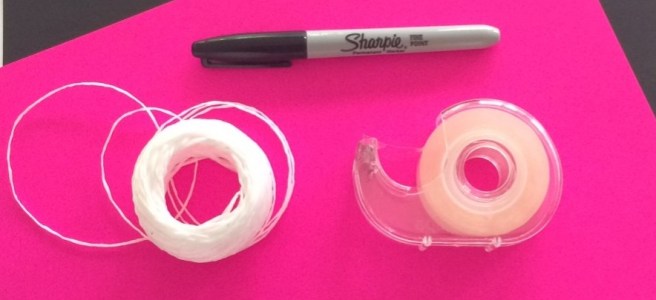
In play, small children don’t need criteria met or particular preceding steps to prototype. Small children seem to know intuitively, it’s just the best way to figure something out. With paper, card, sticky tape. Whatever’s around.

As adults, we often need the permission of a recognised methodology to prototype. Perhaps because prototyping is applied and applied practices can get a bad rap. Seen as inferior to their theoretical counterparts. Less lofty. But guess what? The kids have known it all along. Prototyping works. Testing and iterating ‘the thing’, even in a very rudimentary way, leads to better things and things not foreseen at the outset.

Tom Chi, of Google Glass fame talks about prototyping eloquently as “the realm of using paper, clay and tape in order to go and find a new insight in an ancient technology”.

Getting from A to B more efficiently won’t cut it in the future. We need kids to become adults engaged in expansive learning, primed to invent new point Bs, not yet imagined. Prototyping – with basic construction materials, pen and paper, even words – is the all important doing, the means to test and learn, to get us there.

Try this at home kids (and parents)

Value prototyping. Model it and keep it in play (puns definitely intended), through school and beyond. And try the marshmallow challenge!

https://dschool.stanford.edu/resources/spaghetti-marshmallow-challenge

Thank you for the inspiration @theamywhit (via @goop),  @dintersmith and @thegoodtomchi.
End of the bitumen

You’ll look up and down streets. Look ’em over with care. About some you will say, “I don’t choose to go there.” With your head full of brains and your shoes full of feet, you’re too smart to go down any not-so-good street.

Oh the Places You’ll Go, Dr Seuss 

Talking to Alec Baldwin on Here’s the Thing, comedian Steve Young describes working on The Harvard Lampoon as a pivotal moment. It was here he realised  “there have been people who have gone before… and for the first time, maybe in your life, you think ‘oh’ this is something people do for a living”.

Experiences like this matter. They are the forks in the road that divert people into jobs that lead to careers.

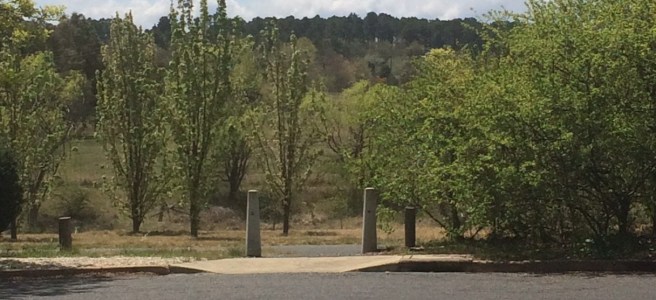
But how does this work when the road isn’t well travelled? When the jobs don’t exist yet or are unrecognisable as work? When the bitumen hasn’t been poured.

We need more modern day equivalents of Steve Young’s Lampoon experience.

For Zoe Baird, CEO of the Markle Foundation, it’s about finding ways to literally show people the new jobs.

…advanced manufacturing jobs, people don’t see themselves in those because their uncle or their brother isn’t working in advanced manufacturing, but if their Facebook friends show them what advanced manufacturing jobs looked like and that people like them were doing those jobs then they can see themselves.

Zoe Baird on McKinsey & Company podcast The New World of Work.

She goes on to say Google is putting significant effort into figuring out “how to use its assets to help people see better what (new) jobs look like”.

“It’s not what you know, it’s what you see”?

Try this at home kids

Practice what Zoe Baird suggests and take advantage of technology to see the jobs of the future – TED talks, profiles, social networks.

Research shows that when it comes to finding a job, it’s the ‘weak ties’ between people – the more tenuous links, the friends-of-friends – that matter the most. Perhaps in the future the research will substitute ‘friends-of-friends’ with ‘social network platforms’ showing people what the jobs of the future look like, helping people see themselves in those roles.

… And here’s an analogue tip, from Tyler Cowen, economics professor, author, and creator of the blog, Marginal Revolution in discussion with Shane Parrish of the Knowledge Project: introduce your kids to your friends with different and interesting careers.

* ‘End of the bitumen‘ by Slim Dusty