The world needs more prototyping

We prototype to test and learn – “everything is a guess until you do something and then, once you do something, you can learn”, Amy Whitaker on the Goop podcast.

In science this has a rigour to it. An hypothesis is made: the fact prototype. The scientist sets out to disprove it, methodically.

In design thinking and typically human centred design, the prototype is arrived at after a period of divergent thinking in concert with humans (imagine), into the second of the Double Diamonds.

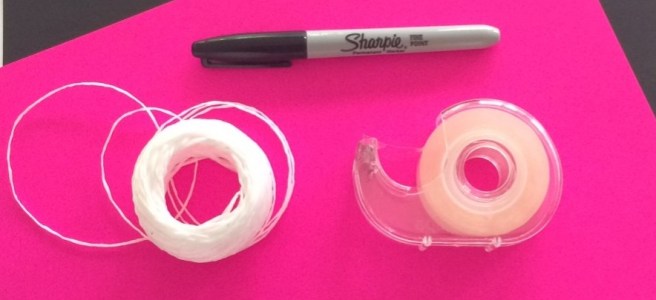
In play, small children don’t need criteria met or particular preceding steps to prototype. Small children seem to know intuitively, it’s just the best way to figure something out. With paper, card, sticky tape. Whatever’s around.

As adults, we often need the permission of a recognised methodology to prototype. Perhaps because prototyping is applied and applied practices can get a bad rap. Seen as inferior to their theoretical counterparts. Less lofty. But guess what? The kids have known it all along. Prototyping works. Testing and iterating ‘the thing’, even in a very rudimentary way, leads to better things and things not foreseen at the outset.

Tom Chi, of Google Glass fame talks about prototyping eloquently as “the realm of using paper, clay and tape in order to go and find a new insight in an ancient technology”.

Getting from A to B more efficiently won’t cut it in the future. We need kids to become adults engaged in expansive learning, primed to invent new point Bs, not yet imagined. Prototyping – with basic construction materials, pen and paper, even words – is the all important doing, the means to test and learn, to get us there.

Try this at home kids (and parents)

Value prototyping. Model it and keep it in play (puns definitely intended), through school and beyond. And try the marshmallow challenge!

https://dschool.stanford.edu/resources/spaghetti-marshmallow-challenge

Thank you for the inspiration @theamywhit (via @goop),  @dintersmith and @thegoodtomchi.
Future talent stack

Like bacon and maple syrup, culinary magic lies in unexpected combinations.

Uncommon skill combinations can be magical too.

Think technology and ethnography (good on you Genevieve Bell – @feraldata), economics and psychology (behavioural economics) and design, with well just about anything.

Layer on something like leadership or storytelling, and you’re getting to what writer and satirist Scott Adams calls a ‘talent stack’. A combination of multiple skills and knowledge areas that can have commercial value and be an alternative to being the best in a single field.

Talent stacks don’t superseded notions of generalists and specialists, or polymaths, but with advances in machine learning, in narrower functions in particular, people with great talent stacks seem likely to be important lynch pins in organisations and communities.

Try this at home kids!

Today’s suggestion is a twist on the classic “What would you like to be when you grow up?”

If our kids can expect to ‘be’ a range of things in a lifetime and talent stacks can be an effective means of giving individuals more power and autonomy, this seems to be an FAQ ripe for re-framing.

Next time the discussion turns to ‘What would you like to be when you grow up?”, how about asking instead ‘What do you want to do when you grow up?’, ‘What interest/skills can you bring to a job or problem that needs solving?’ or ‘What will your talent stack be?’

Thank you Emily Painter (@CoatOfPainter) for drawing our attention to talent stacks. Thank you Tim Ferriss (@tferriss) for reminding us of the importance of asking better questions.

Postscript – (indirect) stamp of approval from the excellent Adam Grant!


Editing: old school for iterating

‘Come with me. A superhero soon you’ll be’! Choose a costume: shield or cape? Boots to make a quick escape? What’s your power? Strength or speed? These are things all heroes need.

How to Be a Superhero by @SueFliess

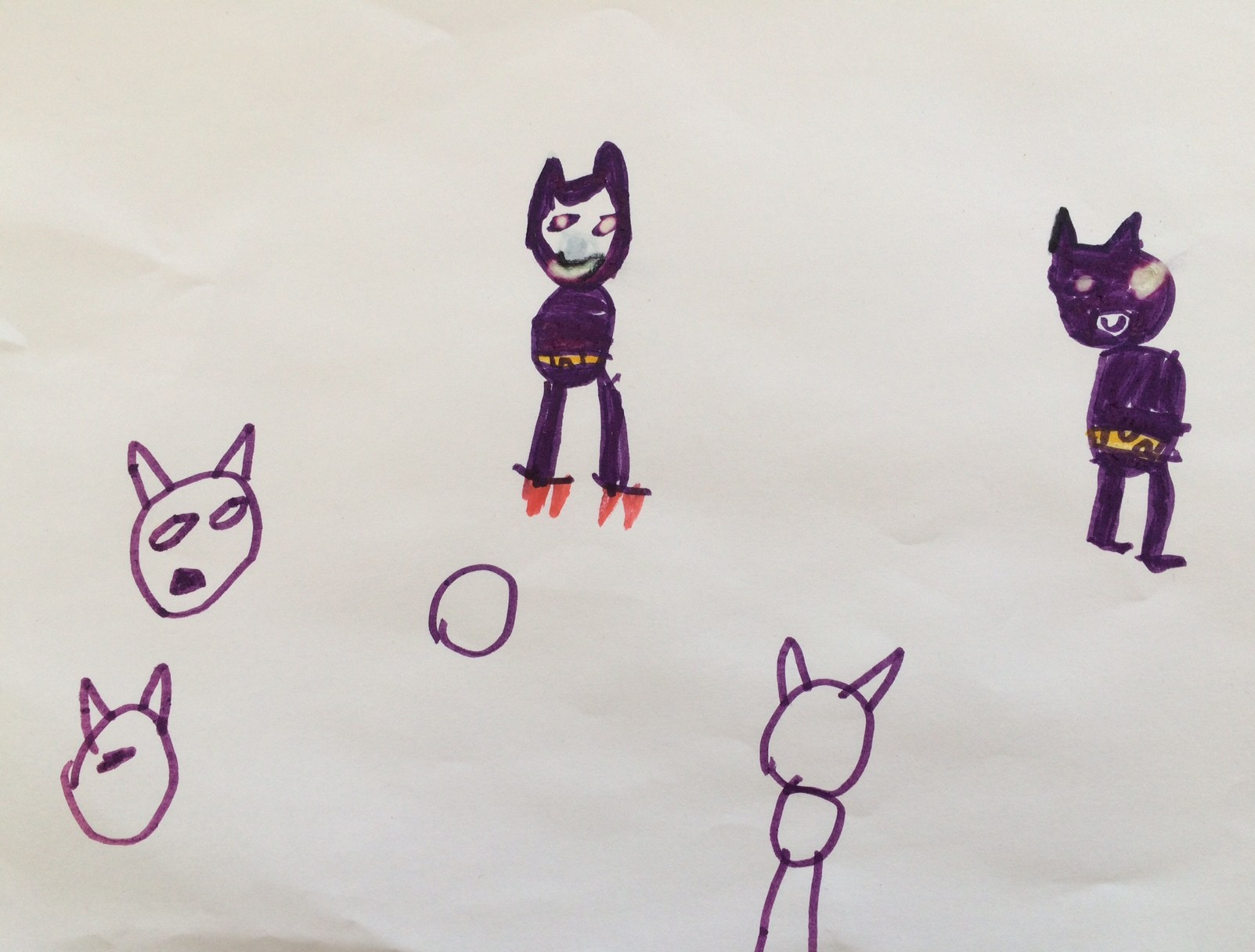
Getting your superhero just right takes a few goes.

IMG_3641

Kids can spend hours drawing. Getting what they see in their heads down on paper. Iteration is core business.

Writing seems to be approached differently. Perhaps because dabbling is more difficult for younger kids or, in a school context, there’s a draft or two, but that’s it. Hand it in. Onto the next thing.

Editing prose – drafting and redrafting, getting to heart of the matter – isn’t fashionable, but it’s incredibly valuable in business.  Consider how written material contributes to compelling brand identifies and value propositions.  When consumers are time poor and platforms are crowded, getting to the point is critical.

Also, experts who can also write well, have a real competitive advantage.  Equipped with great knowledge and the capacity to translate complex ideas into words that speak to people? Now that’s a real super power.

Yet editing is a skill rarely overtly taught in schools.

Try this at home kids!

Here’s an activity for older kids, taken from Jason Fried’s blog post The writing class I’d like to teach. It can help encourage kids to bring the approach they often bring to drawing, to writing.

Pick a topic, any topic, and write a three page version, a one page version, a three paragraph version, a one paragraph version, and a one sentence version.

Each step requires asking ‘What’s really important?’ That’s the most important question you can ask yourself about anything….Whittling it all down until all that’s left is the point.

Jason Fried, co-founder and CEO of Basecamp in episode #329 of The Tim Ferriss Show and in a Signal v. Noise.

Thanks for the inspiration @jasonfried and @tferriss.

Once upon a time, waiting for an Uber

In the first season of StartUp, Alex Blumberg talks about an early pitch to Chris Sacca, for what would later become Gimlet Media. On a sidewalk, under pressure, it doesn’t go well. Chris Sacca steps in and translates. He plays the conversation back with the contemporary constraint “in the two minutes it’ll take for an Uber to arrive”.  Compelling and to the point, its pitch perfect.

The ‘pitch’ is a modern form of storytelling. And the pitch itself can be enough; to win investors, partners, even customers. In business, as in life, stories matter. A lot.

The value of authenticity and narrative arc are widely acknowledged in shaping how compelling a story is. In ‘A Debate with Malcolm Gladwell from WorkLife with Adam Grant’, however, Malcolm Gladwell and Adam Grant focus-in on another quality of storytelling “interestingness”.

For Malcolm, “…that quality of being specific and being able to illustrate your larger points with… precision is the quality of what makes something interesting.”

For Adam, interestingness has its origins in a certain kind of… pause. Drawing on the work of sociologist Murray Davis he suggests that “If someone just affirms your assumptions, you don’t get curious, you don’t get intrigued, there’s no surprise… when you’re interested is when it’s like ‘huh’, that’s the opposite of what I would have thought, or that’s different from what I would have believed”.

So if M. Sanjayan’s right and storytelling is a way to rule the world, well that’s a craft to master. Time to take “Once upon a time” and crank up the ‘interesting’.

Try this at home kids!

  1. Pocket full of stories: without little eyes watching, pop four or five everyday items into the pocket of a coat. This is now the storytelling coat. Get the kid(s) to put it on, check their pockets and then tell a story incorporating the objects they find.
  2. First half / second half: begin by telling a story out loud. Right after you get to a critical point, stop and let the kid(s) take over.
  3. The pitch over dinner: at breakfast time, ask the kid(s) to keep an eye out during the day for a ‘problem’ they encounter and to come to dinner with an idea to solve it.  The problem doesn’t need to be enormous – a top that’s hard to get on, pens and socks that keep disappearing – anything that doesn’t go smoothly will do.

In each case, encourage the kid(s) to make the story as interesting as possible. Talk about what might help with this. Perhaps by incorporating a real story, something they have experienced, getting very specific or getting characters to do the opposite to what you might expect.

Thank you for the inspiration Alex Blumberg (@abexlumberg), Chris Sacca (@sacca), Adam Grant (@AdamMGrant), Malcolm Gladwell (@Gladwell), Guy Raz (@HowIBuiltThis) and M. Sanjayan (@msanjayan) ℅ Tim Ferriss (@tferriss). All masters of their particular storytelling craft.

Postscript

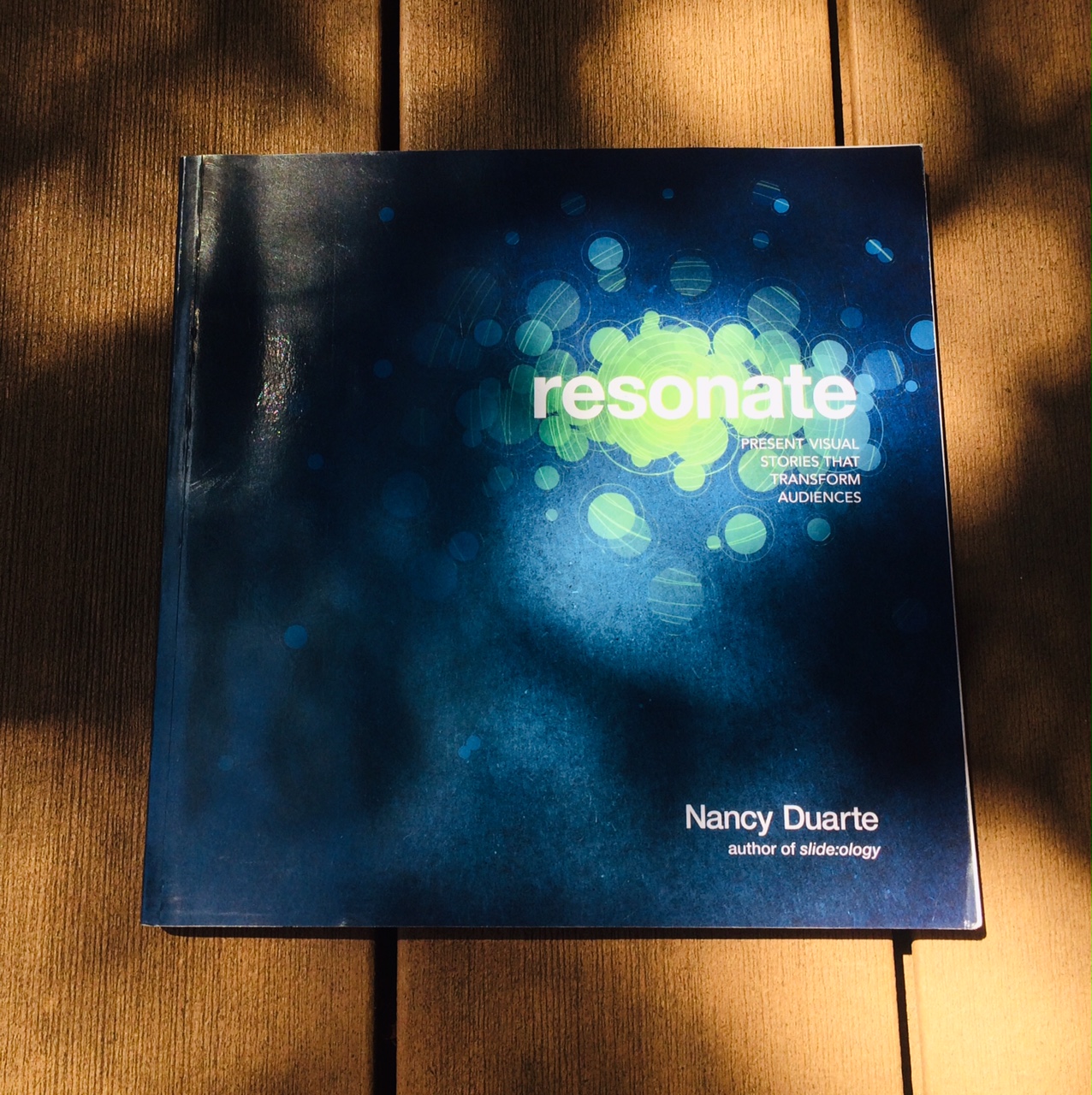
For more inspiration, Nancy Duarte‘s Resonate is a masterclass, and modern take, on “Once upon a time…”.